FOR IMMEDIATE RELEASE – The Kevin Johnson Story

Community Calls on NFL to Honor Former Player Kevin Johnson After Tragic Death in Los Angeles.

It has been weeks since former NFL defensive lineman Kevin Johnson was murdered while living unhoused in Los Angeles, and as far as community members know, the NFL has not spoken his name.

Kevin Johnson played in the NFL. He fought in the trenches. He gave everything he had to the game. And yet, he died alone, murdered in a homeless encampment in South Los Angeles. Mr. Johnson, a former defensive lineman for the Philadelphia Eagles and the Oakland Raiders, died at age 55.

His death has sparked national concern about the growing number of former professional athletes who face housing instability, chronic health issues, and financial hardship after their playing careers end. Kevin Johnson gave his body, his labor, and his talent to the NFL, and he deserves dignity in life and dignity in death. His family should not have to carry the burden of laying him to rest alone.”

Across the country, supporters are calling on the National Football League to formally honor Kevin Johnson and acknowledge the circumstances surrounding his death. They are urging the NFL to:

  • Publicly honor Kevin Johnson’s life and career
  • Provide financial support to his family for funeral and memorial expenses
  • Acknowledge the systemic issues that contribute to homelessness among former players
  • Strengthen long-term support programs for retired athletes

Kevin Johnson’s story reflects broader challenges faced by many former NFL players, including chronic injuries, traumatic brain injuries, mental health struggles, financial instability, and limited access to long-term support. When someone who gave years of his life to the league dies in such vulnerable circumstances, the absence of acknowledgment feels like a second loss, a kind of erasure.

This is not just about one man; it’s about the responsibility the NFL must share to ensure that no former player is forgotten on the margins of society. What happened to Kevin Johnson should never happen to any former player. This should never happen to any human being.

I/We are calling on the NFL to act with compassion, leadership, and humanity. Kevin Johnson was part of the NFL’s billion-dollar network of organizations that benefited from his talent. He served the NFL for years, and now, they say, it is time for the NFL to serve him.

{Coming Soon – How Agents and Others Take Money From NFL Players and Leave Them Broke}

© Mansour Id-Deen/ Inter-City Services, Inc.

middeen@icsworks.com

(510) 655-3552

Enough For All (EFA) Part I

For centuries, societies have wrestled with the same fundamental question: If the world produces enough for everyone, why do so many have so little? Economists, theologians, and philosophers across cultures have reached a similar conclusion: poverty is rarely the result of natural limits. It is the result of human decisions.

Modern data reinforces this truth. The United States today generates more wealth than at any point in its history, yet that wealth is increasingly concentrated at the top. According to federal income statistics, the top 1% now holds more wealth than the entire bottom 90% combined. Meanwhile, wages for middle-income and low-income workers have barely kept pace with inflation over the last four decades, even as productivity has soared. In other words, workers are producing more value than ever, but receiving a shrinking share of the rewards.

This imbalance did not emerge by accident. It is the cumulative result of policy choices, tax codes rewritten to favor capital over labor, loopholes carved out for the wealthy, and repeated rounds of tax cuts that disproportionately benefit those already thriving. Each time lawmakers pass another bill that shifts resources upward, they reinforce a system that contradicts the basic moral intuition shared across belief systems: that human beings deserve fairness, dignity, and the ability to meet their basic needs.

History shows that societies thrive when prosperity is broadly shared. After World War II, for example, the United States experienced decades of strong economic growth, rising wages, and expanding opportunity. Tax rates on the wealthiest households were significantly higher than they are today, yet the economy boomed. Middle-income Americans grew, and wealth, generated by homeownership, expanded. Some Families could afford education, healthcare, and retirement. That era wasn’t perfect, but it demonstrated a simple principle: when the economic foundation is strong for the many, the entire nation benefits.

Contrast that with the present moment. When Congress enacts permanent tax cuts for millionaires and billionaires, such as those embedded in the so-called Big Beautiful Bill Act of 2025. It widens a gap that was/is already historically large. These cuts reduce federal revenue, making it harder to fund public goods like schools, infrastructure, healthcare, and nutrition programs. The result is predictable: the wealthy gain more financial comfort, while working families face rising costs, shrinking safety nets, and fewer opportunities to build stable lives.

If we accept that the world contains enough for “All,” then we must also confront the uncomfortable truth that inequality is not a natural condition; it is a policy choice. And every time lawmakers choose to prioritize the wealthiest over the well-being of the majority, they choose a future where abundance coexists with unnecessary hardship.

A society that truly believes in fairness, whether grounded in faith, ethics, or simple human decency, cannot ignore the moral implications of policies that enrich a few while leaving millions struggling. The question is not whether we have enough. The question is whether we are willing to build systems that reflect the values that humanity demands.

Urgent Call to Action for the 2026 Election

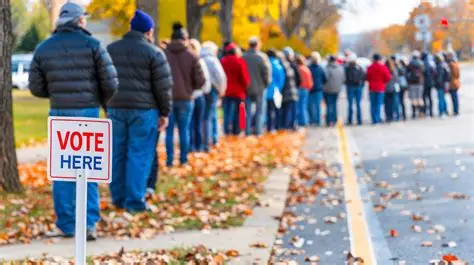
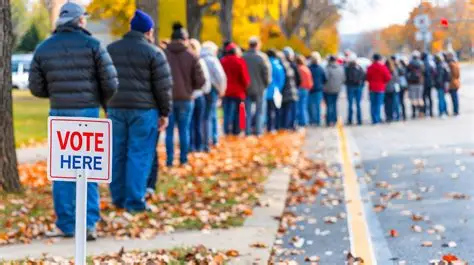
American democracy is not guaranteed. It is not self-maintaining. It survives only when citizens refuse to look away. And with the 2026 elections approaching, the country is entering a moment that demands more from all of us, more vigilance, more participation, more courage.

Across the nation, people are raising alarms about the health of our democratic institutions. Some view concentrated power and political dysfunction as warning signs that cannot be ignored. Others are deeply concerned about election integrity and the need for transparency, strong safeguards, and public trust. These concerns may differ, but they point to the same truth: democracy is only as strong as the people who defend it.

This is not the time for complacency. This is not the time to assume someone else will step up. This is the moment to act. A self-governing society collapses when citizens disengage. It thrives when they pay attention, ask hard questions, and demand accountability from every branch of government. That responsibility does not begin on Election Day; it begins now.

If Americans want a democracy worthy of their trust, they must insist on it. That means demanding transparency from political leaders and institutions. It means supporting clear and consistent election rules. It means participating in local and state election processes, where so many critical decisions are made. And it means staying informed about how elections are administered, rather than relying on rumor or assumption. If you didn’t know, then let this be the reminder: Elections have consequences.

This is not about fear. It is about vigilance. It is not about partisanship. It is about responsibility. It is not about winning or losing. It is about ensuring that every voter, every single one, can trust the outcome.

Courts, election officials, and independent reviews have repeatedly emphasized the importance of evidence‑based claims, yet public trust remains fragile. Rebuilding that trust requires action, not passivity. Engagement, not resignation. Oversight, not silence.

The 2026 election will not define itself. Voters will define it through the choices they make in November.

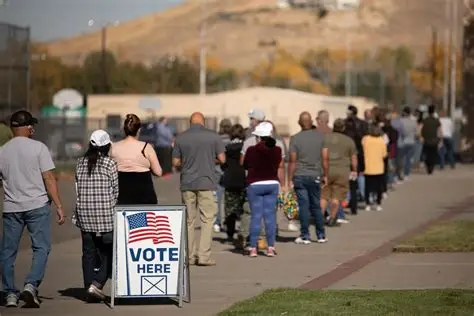
If Americans want a future built on stability, accountability, and confidence in their political leaders and institutions, they must fight for it now. Democracy has never been defended by spectators. It has always depended on citizens who refuse to surrender their role. The call is urgent. The responsibility is ours. And the time to act is today. Do your job, and I will surely do mine. This is about the “Power of YOUR Vote!

Believe Me, My Friends, There Is Enough For All…

Will Iran And The Real Global Leaders, Please Stand Up For Peace

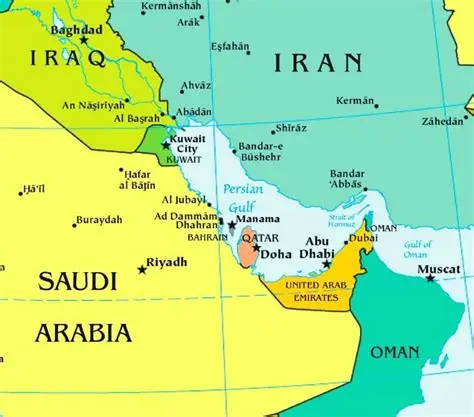
How much more blood must soak the Iranian soil before the cries of the people are heard? How many more lives must be bent, broken, or silenced before mercy outweighs fear? Enough of the killing. Enough of the suffocating control over the lives of millions of Iran’s people. Seventy-six years after the revolution, the people of Iran still struggle to breathe freely, to build families, and imagine futures untouched by dread.

A nation with such ancient beauty and brilliance should not be a place where hope is rationed and fear is abundant. The problems facing Iran are not insurmountable. They are human-made, and therefore human-solvable. The people deserve a life without terror, without confusion, without the constant shadow of violence.

The time has come. Not tomorrow. Not someday. Now. Let the people live the lives they have been denied for far too long. For many years, the people of Iran have endured profound hardship, fear, and restrictions that have limited their ability to live freely and safely. The continued loss of life and the tight control over personal freedoms have created deep pain across generations. It is time to bring this chapter to an end.

The Iranian people still face significant barriers to building stable families, secure futures, and peaceful lives. Yet Iran remains a nation with extraordinary potential, culturally, economically, and socially. The challenges Iran faces are complex but not beyond resolution. The Iranian people deserve a future built on dignity, safety, and trust. The people of Iran deserve the opportunity to live without fear, without violence, and without confusion.

Choosing a path of openness and humanity would not only strengthen the nation but also honor the resilience and aspirations of the Iranian citizens. The Iranian diaspora worldwide is longing to come home and smell the soil of the historical birthplace. They hope to see their beloved country take steps toward a more peaceful and prosperous future for all its people. The ongoing violence, repression, and control over the lives of the Iranian people must end.

No government has the right to deny its citizens safety, dignity, or the freedom to live without fear. The killing, the bloodshed, and the suppression of basic human rights cannot continue. After years of struggling, the people of Iran still struggle to form families, pursue opportunities, and live without intimidation. These are fundamental human rights that are not privileges to be granted or withheld.

Dropping bombs on Iran, killing scores of innocent people, is not the answer. Therefor, I believe it’s time to revisit the Joint Comprehensive Plan of Action (JCPOA). For those who forgot, in 2015, Iran and the P5+1 (US, UK, France, Germany, Russia, China) reached the Joint Comprehensive Plan of Action (JCPOA). Iran agreed to limit its nuclear program, reduce enrichment, and accept intensive inspections. In return, the world would lift nuclear-related sanctions, opening the door to economic recovery and global trade. Many inside and outside Iran saw this as a path to peace, prosperity, and normalization. It’s time for PEACE:

Therefore, I am sure that all intelligent nations and people would like the return of the Joint Comprehensive Plan of Action. I believe that the majority of global leaders stand ready to support a path that prioritizes human rights, stability, and the well-being of the Iranian people and all others. It is time for change, meaningful, lasting, human-centered change.

PEACE

What Happens to the Property of Immigrants Detained or Deported by ICE?

Detention or deportation does not automatically strip someone of their property rights. Legally, immigrants continue to own their homes, cars, bank accounts, businesses, and personal belongings. In practice, however, many lose access to these assets because they cannot manage them while detained or after being removed from the country.

Once someone is in ICE custody, access becomes extremely limited. Detained immigrants often cannot pay mortgages or rent, access bank accounts, renew car registrations, maintain property, or appear in civil court. As a result, assets are frequently lost: homes go into foreclosure, cars are repossessed, belongings are discarded after eviction, and businesses collapse due to lack of management.

Families sometimes step in by taking over payments, selling property on the person’s behalf, or storing belongings. But many immigrants do not have someone who can legally or safely manage their affairs.

A separate issue is civil asset forfeiture. If ICE or another agency claims that property is connected to a crime, it can be seized even without a criminal conviction. The owner must fight in court to reclaim it — something that is often nearly impossible from detention.

The reality is that many immigrants lose everything. This happens because detention cuts off communication and legal access, deportation often occurs suddenly, people cannot return to the U.S. to manage their property, many fear interacting with courts or banks, some states allow landlords to dispose of belongings after short notice, and civil forfeiture laws place the burden of proof on the owner.

To improve the chances of retaining their assets, immigrants can use several protective strategies: assign power of attorney to someone trustworthy, keep important documents accessible to family, consult an immigration or property attorney, document all assets, and arrange for someone to manage or sell property before deportation.

In the end, the issue is not simply about property; it’s about the human cost of a system that leaves people unable to protect what they’ve worked for. Immigrants may retain their legal rights on paper, but the realities of detention and deportation often make those rights impossible to exercise. Until there are meaningful safeguards that allow people to manage their affairs, countless families will continue to lose homes, vehicles, savings, and livelihoods not because they forfeited them, but because the system made it impossible to hold on.

Congress is often called the “first branch” of government because the Constitution places it at the center of lawmaking and grants it the foundational powers that define the federal system. Its role in creating laws, controlling the budget, and checking the executive and judicial branches reflects the framers’ intention that representative democracy begin with the people’s elected legislature.

When Leaders Enjoy Guaranteed Healthcare While Millions Struggle, Something Is Deeply Immoral.

In a country as wealthy and capable as the United States, it’s hard to ignore a painful contradiction at the heart of our healthcare system. The people who write our laws, enforce the law, and interpret the law, members of Congress, the White House, and the federal judiciary, all receive stable, high-quality, taxpayer-subsidized health insurance. Meanwhile, millions of ordinary Americans face rising premiums, shrinking coverage, medical debt, and the constant fear that loss of their jobs and one illness could upend their lives.

This isn’t just a policy gap. It’s an immoral action on behalf of American political leaders. Public officials are shielded from the very hardships they debate and refuse to provide to the average citizen. Political leaders’ coverage is guaranteed. Their premiums are subsidized. Their plans are comprehensive. They never have to worry about losing insurance if they lose an election, change jobs, or face a medical crisis.

The average American has to navigate a healthcare system that is full of uncertainty, one where coverage depends on employment, deductibles can swallow a paycheck, and political gridlock can determine whether families can afford basic care.

When leaders fail to secure protections for the people they serve, trust erodes. A government funded by taxpayers should not provide better care for itself than for the taxpayers who make that system possible. If anything, public servants should feel the urgency of fixing healthcare because they share in its vulnerabilities, not because they’re insulated from them.

A fair society demands that those in power confront the same realities as the people they represent. Until that happens, the moral imbalance at the center of American healthcare will remain impossible to ignore. Again, the wealthiest country in the world fails to fund health for the people.

Moral Decay, Unchecked Power, & Erosion of Shared Truth

What will Americans do when power breaks free from truth, and the lessons from our historical past, which are crucial for interpreting the present and shaping the future, are rapidly declining? Well, we are here now!

Civilizations rarely collapse in a single dramatic moment. More often, they erode quietly, grain by grain, as shared values weaken and truth becomes negotiable. History offers countless warnings about what happens when moral decay, unchecked power, and the abandonment of reason and evidence converge. Few examples are as instructive—or as haunting—as the final years of the Roman Republic.

The civic-minded, disciplined society that we fought for over the last 250 years is slowly dissipating in the rapidly corporate-driven, polluted air we are forced to breathe every day. Money-driven policies driven by billionaire/millionaire donors have neutered our political leaders; hence, wealth is rapidly concentrated in the hands of a few. Political offices are openly bought and sold, and public trust in institutions has thinned to a whisper.

This isn’t just institutional corruption; it is a deeper unraveling, a slow drift away from the shared moral framework that once held the American democracy together. Public service has been turned into a marketplace where influence is traded like stocks. Propaganda has replaced shared truth, and encounters become weaponized rumors, drowning citizens in competing realities.

In today’s America, power is concentrated in a dangerous manner. Specifically, the leadership of the Department of Justice (DOJ) and the Secretary of Defense commands personal loyalty from employees that eclipses loyalty to the Nation. It is apparent that, in most instances, decisions and expertise are sidelined for political advantage, not the public good. Violence has entered civic life, where U.S. Immigration and Customs Enforcement (ICE) officers blurred the line between protecting the community and intimidating citizens.

The danger of power without truth is emerging in America because our society is losing its shared understanding of reality, making it increasingly vulnerable to manipulation. Competing narratives fracture the public into tribes, facts become optional, and emotion becomes the primary currency of persuasion. Without a commitment to truth, power no longer needs to justify itself. Without reason, it no longer needs to persuade. Without shared moral norms, it no longer needs to restrain itself.

Based on history, at some point, every society faces moments when truth becomes contested, when institutions strain, when leaders discover how easy it is to bend reality to their will. The danger isn’t simply that someone might seize too much power. The greater danger is that people stop caring whether what they hear is true. Case in point: January 6, 2025, became a turning point for truth, legitimacy, and public trust. A culture that abandons truth invites its own undoing.

In closing, America is at a turning point, and if we are to save our democracy, we must strengthen our civic virtue by rewarding our integrity, not spectacle. We must protect shared truth by supporting institutions that verify facts and elevate evidence. We must limit concentrated power and ensure no individual or faction can dominate unchecked. We must value expertise and reason and let decisions be guided by knowledge, not noise. Lastly, we must wholeheartedly reject political violence because no society can honestly debate freely when fear enters the room.

When power becomes disconnected from reason, when leaders elevate loyalty over honesty, and when people choose comforting lies over difficult facts, decline becomes inevitable. The warning is historic, but the responsibility is ours.

Global Diplomatic Solutions (GDS)

I open this blog with a question: What has happened to peace-seeking global citizens? As of January 5, 2026, the world stands at a pivotal moment. Civility has yielded to dogmatic ignorance, and the international system is more fragmented than ever. Traditional alliances are strained, new regional powers are rising, and emerging technologies are reshaping how nations communicate, negotiate, and compete.

As major powers increasingly disregard institutions such as the United Nations, the International Court of Justice, and the World Trade Organization, the foundations of collective security weaken. These institutions were created to uphold international law, mediate disputes, and provide a stable framework for cooperation. When they are undermined, the world becomes less predictable and more vulnerable to conflict, inviting powerful states to assert dominance within their spheres of influence.

This erosion of multilateral institutions has accelerated the fragmentation of global governance. Without trusted platforms for cooperation, crises escalate more easily, and nations are left to navigate challenges through unilateral actions or ad‑hoc alliances. Smaller nations, in particular, lose the neutral forums they depend on to safeguard their interests.

Yet the world of 2026 is defined not only by division but by deep interdependence. No nation can shield itself from climate shocks, economic volatility, technological disruption, or the movement of people across borders. This paradox, rising fragmentation amid growing interconnectedness, is the central diplomatic challenge of our time.

Meeting this moment requires a renewed commitment to cooperation. Stability cannot be achieved through isolation or dominance, but through dialogue, restraint, and shared responsibility. Diplomacy must evolve: reaching beyond traditional alliances, engaging emerging powers, and building flexible coalitions capable of responding to fast-moving crises. It must embrace innovation, transparency, and inclusivity, reaffirming that peace is built not through force but through understanding.

In this fractured landscape, leadership is measured not by dominance but by cooperation. The nations that will shape the future are those willing to listen, negotiate, and build bridges—even when it is difficult. Diplomacy is not merely a tool of statecraft; it is the foundation of global stability.

The world cannot afford complacency. The challenges ahead, from climate instability to technological upheaval, demand collaboration, not confrontation. Diplomacy must rise to this moment with creativity, courage, and conviction.

Our responsibility is clear: rebuild trust, strengthen dialogue, and reaffirm the principles that have long supported international peace. The future will be shaped not by those who act alone, but by those who choose to engage, listen, and lead through cooperation.

In 2026, diplomacy is not simply an instrument of influence. It is the path toward a more peaceful and resilient world.

Turning Point USA – Where Do They Go From Here?

Since the unfortunate and untimely death of Charlie Kirk on September 10, 2025, Turning Point USA appears to be moving forward without pause or interruption in its activities. Under Kirk’s leadership, TPUSA raised nearly $400 million, according to tax filings, an extraordinary amount of money for any nonprofit operating in today’s complex social and political environment.

I also learned that several Jewish or pro‑Israel philanthropists, including extremely wealthy donors, have been involved with TPUSA at various points. Some of these donors reportedly withdrew support over disagreements with Kirk’s stance on Israel. This raises an important question: How do Jewish or pro‑Israel philanthropists benefit from supporting TPUSA, given that segments of the organization’s conservative base are known to express antisemitic views?

For many donors, philanthropy is strategic. Supporting an organization like TPUSA can provide political access, influence over messaging, and the ability to shape the ideological development of young conservatives. From this perspective, TPUSA becomes a long‑term investment rather than a simple charitable contribution.

TPUSA is one of the most influential conservative youth organizations in the United States. Backing TPUSA allows donors to promote pro‑Israel messaging to a new generation, counteract anti‑Israel sentiment on college campuses, and ensure that young conservatives remain aligned with their broader political goals. But this relationship is inherently transactional—and increasingly fragile.

TPUSA now sits at the intersection of mainstream conservative donors, including pro‑Israel philanthropists, and populist or far‑right influencers, some of whom have expressed antisemitic views. Donors often support organizations that advance their overall political objectives, even when they disagree with certain elements. However, tensions over Israel and antisemitism have already caused donor backlash and withdrawals, signaling that the alliance is far from stable.

In the post‑Kirk era, TPUSA will need to navigate these competing pressures carefully. Its ability to maintain relationships with major pro‑Israel donors may determine how effectively it can continue expanding its national and global activities. The organization’s future depends on whether it can balance ideological contradictions within its coalition while preserving the financial support that has fueled its rise.

Reclaiming Balance: A Reflection on Congress and the Courts

The United States doesn’t have a King. It’s ruled by “three equal branches of one federal government. Legislative (Congress), Executive (President), and Judicial (Supreme Court and federal courts). The Constitution was designed with checks and balances to prevent any branch from dominating. Over time, though, the executive branch has often expanded its influence, especially in foreign policy, national security, and through executive orders. For this Democracy to survive, the Legislative and Judicial branches must reclaim their power.

The presidency was never meant to be the engine of America’s democracy. That line could serve as the guiding reminder for a nation that has increasingly placed the executive branch at the center of attention. Executive orders dominate headlines, wars unfold with little debate, and national emergencies stretch on for years. Meanwhile, Congress and the courts often appear muted, their constitutional authority overshadowed.

Congress must avoid delegating broad authority to executive agencies and instead write clearer, more detailed laws. They must strengthen oversight by using hearings, investigations, and budgetary control to check executive actions. Congress must also limit emergency powers and narrow the scope of presidential emergency declarations and war powers. Most of all, Congress must honor its oath to the people by reducing gridlock so it can act decisively, rather than leaving a vacuum for the executive branch.

The Judicial Branch (Courts) must assert judicial review by striking down unconstitutional executive actions or laws that overreach. The judiciary must clarify the limits of executive authority by issuing rulings that define boundaries on presidential powers, especially in areas like national security and administrative law. The judiciary must also protect its independence by resisting political pressure and maintaining credibility so that rulings carry weight. “We The People” must demand that our Legislative (Congress) and Judicial (Supreme Court) rein in the “administrative state” by limiting the amount of power the Executive has without direct congressional oversight.

It’s less about the two branches “reclaiming” power; it’s more about exercising the authority they already have under the Constitution. The American people must hold both Congress and the Supreme Court accountable for their lack of oversight related to the repeated failures of standard operations by the executive branch of the administration.

We, the American People, want our government to return to “Regular Order.”