Monthly Archives: October 2026

The Real Question Is Not Who Pulls the Trigger. It Is Who Profits.

When the world speaks of accountability, it often focuses on those who commit the violence. But what about those who finance it, arm it, justify it, profit from it, or look away?

If someone supplies the bombs, provides the intelligence, offers diplomatic cover, crushes the protests, and excuses the abuses, they must be recognized as someone with a high degree of responsibility and culpability. The same principle applies to the exploitation of resource-rich nations that leaves the poorest people on Earth. Nowhere is this contradiction more visible than in the Democratic Republic of the Congo (DRC).

The DRC possesses some of the world’s most valuable deposits of cobalt, copper, coltan, gold, diamonds, and other critical minerals that power smartphones, computers, electric vehicles, and modern industry. The World Bank describes the DRC as a country “endowed with exceptional natural resources,” yet the large majority of its citizens have not benefited from that wealth.

Even the World Bank, which has played a major role in exploiting the DRC, states that, obviously, the DRC remains among the poorest nations in the world, despite its extraordinary mineral wealth, with a large share of the population living in poverty. This is not merely an economic failure; it is a moral indictment of the global economic system.

For decades up until this very day, armed groups, corrupt networks, foreign interests, traffickers, and multinational corporations have benefited from minerals extracted from Congolese soil. The United Nations, the U.S. government, and multiple international organizations have repeatedly documented the role of mineral trafficking in financing conflict and instability in eastern Congo. The question is, why have these entities not sanctioned these natural resource thieves?

The United Nations has known for years that revenues from illicit resource exploitation strengthen armed groups and criminal networks while depriving communities of the benefits of their own resources. The fact is, the world’s economies depend on these resources while the communities producing them remain impoverished; therefore, the international system bears complete responsibility for the thievery of African nations’ natural resources. Let me be clear: the United States, which is known to be the richest country in the world, has explicitly stated that conflict mineral networks exploit wealth that “rightfully belongs to the Congolese people” and use those resources to finance weapons, fighters, and violent insurgencies; what has it done to stop it?

I have several questions to ask leaders and citizens of the world community: If a company knowingly benefits from minerals linked to exploitation, is it innocent? If governments protect systems that allow such exploitation to continue, are they innocent? If investors profit while communities remain trapped in poverty and conflict, are they innocent? If consumers enjoy the benefits but refuse to ask where the resources came from, are they completely innocent?

The issue is not whether every participant is equally responsible. The issue is whether they accept any responsibility at all. History teaches that injustice rarely survives through perpetrators alone. It survives because networks of beneficiaries, enablers, financiers, and bystanders make it profitable. The tragedy of the Congo did not happen because the country lacked resources. It happened while the world consumed them.

The 21st century cannot continue the colonial pattern in which wealth is extracted from Africa, value is captured elsewhere, and the people living above the resources are left impoverished. As UN Secretary-General António Guterres stated, it is time to end the pattern in which resources are extracted while impoverished communities are left behind with the social, economic, and environmental damage. Until the world answers that question honestly, the cycle of exploitation will continue, and the wealth of resource-rich nations will remain a blessing for others and a burden for those who possess it.

In closing, the Democratic Republic of the Congo is one of the clearest examples, but it is far from alone. Countries frequently cited in discussions of the resource curse include: Angola (oil, diamonds), Nigeria (oil, gas), South Sudan (oil), Central African Republic (gold, diamonds, uranium, timber), Sierra Leone (diamonds, minerals), Zimbabwe (gold, platinum, lithium), Mozambique (natural gas, coal, rubies), Venezuela (one of the world’s largest oil reserves), Chad (oil), and Equatorial Guinea (oil and gas).

A strong African Union that is not afraid to document and reveal all perpetrators is needed during critical times. Africa is not demanding charity. Africa is demanding ownership. The minerals beneath African soil belong first to African peoples. Sovereignty means more than the right to watch resources leave. It means the right to ensure that the wealth generated from those resources educates African children, builds African industries, powers African cities, employs African people, and enriches African communities.

That is ultimately the central issue: not simply stopping “resource Africa’s theft,” but transforming Africa from a supplier of raw materials into a producer of wealth, technology, and finished goods.

Africa Has 90% of the World’s Most Valuable Minerals. Moving forward, the African Union (AU) must develop a serious resource-sovereignty strategy that addresses both external and internal actors. The reality is that foreign exploitation often succeeds because local elites, armed groups, corrupt officials, and trafficking networks participate as well.

The AU must also freeze assets, restrict travel, blacklist exploiters, and create a continental anti-corruption court. The United Nations Security Council heard arguments in 2026 that minerals should benefit the countries and communities from which they originate and that it is time to break the pattern in which resources are extracted while value is captured elsewhere. Let’s make this happen, my people.
We Must End Africa’s “Blood Resource Trade”: From Exploitation to Economic Sovereignty

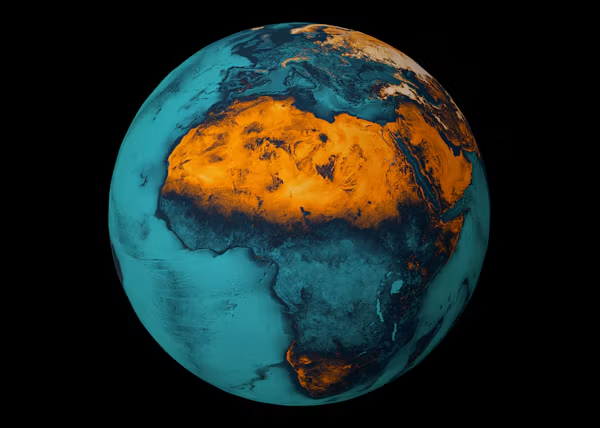
From the beginning, Africa remains blessed with extraordinary natural wealth. From cobalt and coltan in the Democratic Republic of the Congo to gold, diamonds, oil, and rare earth minerals across the continent, Africa has every resource that powers the modern world. Yet paradoxically, too many people living in these communities remain the economically, poorest people on Earth.

This tragic contradiction is the result of what many describe as the “blood resource” trade, a system in which natural resources are extracted under conditions that often enrich foreign interests, corrupt political actors, and armed groups while leaving local populations with poverty, environmental destruction, and instability.

Ending this cycle will require more than good intentions. It demands a fundamental shift toward economic sovereignty, transparency, and accountability.

African nations must control, manage, and benefit from their own natural resources. Mining contracts should be transparent, royalties must be collected at fair market value, and governments must be held accountable by their people to ensure resource wealth reaches the people rather than disappearing into corruption or offshore accounts.

The continent must also move beyond simply exporting raw materials. The future lies in local processing, manufacturing, and value-added industries that create jobs, build technical expertise, and keep more economic benefits within Africa. A ton of raw mineral exported abroad generates only a fraction of the value that could be created if processing and manufacturing occurred locally.

Equally important is the responsibility of multinational corporations and consumers. Companies that profit from African resources must be required to prove that their supply chains are free from conflict, exploitation, and human rights abuses. Ethical sourcing cannot be a marketing slogan; it must be a legal and moral obligation.

Regional cooperation is also essential. Through institutions such as the African Union and the African Continental Free Trade Area, African nations can strengthen their bargaining power, combat cross-border smuggling, and establish common standards for resource governance.

At the heart of the issue is a simple principle: the wealth beneath African soil should improve the lives of African people. Resources should build schools instead of fueling conflict, hospitals instead of corruption, and industries instead of dependency.

The end of the blood resource trade will not come from charity or foreign intervention. It will come when African nations, communities, and institutions take control over their power to exercise full stewardship over their natural wealth and ensure that its benefits are shared broadly among the aboriginals of the land.

The question is not whether Africa possesses the resources needed for prosperity. It does. The challenge is ensuring that those resources serve the people who own them. When that happens, the blood resource trade can finally give way to a future built on dignity, justice, and shared economic opportunity.

Africa’s natural wealth must become a foundation for lasting prosperity, dignity, and economic sovereignty for all its people. Resources discovered and extracted in Africa must be processed on Africa’s soil. For too long, many African nations have exported raw materials while importing finished products at much higher prices. Processing minerals, agricultural products, and other natural resources within Africa would create jobs, develop industries, increase tax revenues, strengthen local economies, and allow African countries to capture the “Fair Market Value” created from their own resources.

It is also well known that the United Nations voted/agreed that all 54 African states maintain “Permanent Sovereignty over their Natural Resources.

Congo’s Wealth, Congo’s Poverty, and the Global Question of Accountability

Breaking News: A growing controversy within Trump’s political orbit has unexpectedly placed the Democratic Republic of the Congo at the center of a high-profile dispute involving two longtime Trump allies: Alina Habba Mildon and Ric Grenell. According to recent reports, a bank account described as “affiliated” with the Congolese government is linked to a larger financial transaction now the subject of allegations, denials, and an internal review.

The dispute has drawn attention because both figures have held influential roles within Trump’s inner circle. Alina Habba Mildon served as one of Trump’s personal attorneys, later became a Counselor to the President, and held senior legal positions within the administration. Meanwhile, Ric Grenell, a longtime Trump adviser and diplomat, has served as a special presidential envoy and previously led the Kennedy Center.

At the center of the controversy are allegations involving millions of dollars that were reportedly intended, in part, for the Kennedy Center. Reports indicate that the larger transaction involved funds originating from an account affiliated with the Congolese government. Grenell has denied wrongdoing and described the allegations against him as false, while officials have reportedly sought documentation to determine the facts.

Congolese President Félix Tshisekedi is behind the transfer of $ 17 million, sent in May 2025 to TX-AT, a Texas security firm. Trump’s former advisor, Ric Grenell, previously consulted for the firm (TX-AT). To get to the truth, we need to know why a resource-rich/poor country like the Congo gave members of the administration of the richest country in the world $17 million in the first place. We must follow the money.

Point of interest: the Democratic Republic of the Congo remains one of the world’s poorest countries despite possessing vast reserves of cobalt, copper, gold, and other strategic minerals. As Congolese President Félix Tshisekedi gives representatives of the United States, the richest country in the world, $17 million, Congolese citizens have to “scrape out a living on less than $3.00 per day”. According to the World Bank, about 85% of the Congo’s population lives in poverty.

Again, the controversy centers on allegations involving millions of dollars reportedly intended, in part, for the Kennedy Center have gone missing. Reports indicate that the larger transaction involved funds originating from an account affiliated with the Congolese government. This situation outlined in my blog must be investigated at the highest levels of the U.S. government.

Yet beyond the personalities and political drama lies a larger issue. The Democratic Republic of the Congo is one of the most resource-rich nations on Earth, possessing vast reserves of minerals that power modern industries worldwide. At the same time, it remains one of the poorest countries by many economic measures, with millions of citizens living in poverty despite the nation’s extraordinary natural wealth.

The Bigger Question is whether the allegations ultimately prove true or false; the controversy spotlights a recurring concern: who benefits from Congo’s wealth? When money connected to one of the world’s poorest populations appears in international business and political disputes of the richest country in the world, transparency becomes more than a political issue. It becomes a moral one.

This real story is not just a feud between powerful individuals in Washington. It is the ongoing contrast between Congo’s immense natural riches and the persistent poverty the majority of its people face. Until greater transparency and accountability surround the movement of wealth connected to resource-rich nations, questions about who profits and who pays the price will continue.

The final question is what exactly Congolese President Félix Tshisekedi gets for giving away proceeds from his people’s natural resources. Leaders like President Félix Tshisekedi are why the United Nations laid the legal foundation for Africa’s economic liberation. Through a series of landmark General Assembly resolutions, most notably Resolution 1803 (XVII) on Permanent Sovereignty over Natural Resources, the 1974 Declaration on the New International Economic Order (Resolution 3201), and the Charter of Economic Rights and Duties of States (Resolution 3281), the UN affirmed that all African nations hold full, permanent sovereignty over their natural wealth. The African Union must step up and fight to end foreign exploitation of African nations’ natural resources.

Specifically speaking, the Democratic Republic of the Congo possesses significant reserves of cobalt, copper, gold, diamonds, and other minerals. Under the principles expressed in Resolution 1803 and the Charter of Economic Rights and Duties of States, the Congolese state has sovereign authority to determine how those resources are developed and how the benefits are distributed among its people. [ohchr.org], [legal.un.org].

“American Constitution, Where Art Thu”

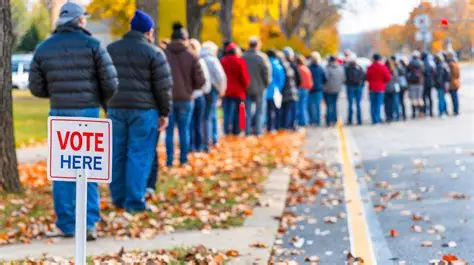
First, I want to establish a clear fact: The 2026 U.S. midterm elections are 23 days away. The power of the vote is the power of the people, the only equalizer in American democracy. Every credible source reinforces the same truth: your vote is not symbolic; it is a governing force that shapes policy, representation, and the nation’s direction.

Regardless of what some degenerates believe, the U.S. Constitution is still the backbone of American democracy. But today, it feels less like a shared foundation and more like a contested battleground. Its authority is invoked constantly, yet honored inconsistently. The Constitution’s text is clear, yet people apply its principles selectively. The question “Where is the Constitution today?” is not rhetorical; it is a civic diagnosis.

The Constitution lives wherever the people insist on it. It is present in every courtroom where rights are defended, in every election where citizens choose accountability over chaos, and in every community that demands equal protection under the law. It shows up in the hands of judges required to apply it faithfully, teachers who interpret it and pass its meaning to the next generation, and voters who refuse to surrender their sovereignty.

In the United States of America, the Constitution is absent at times wherever power operates without restraint. It is missing when leaders treat legal norms as optional, and institutions bend under political pressure. For democracy to survive under the Constitution, citizens’ rights must never be treated as privileges that can be granted or withdrawn depending on who holds office. It fades when cynicism replaces civic responsibility, and when citizens disengage from the very process that keeps the Constitution alive.

The truth is simple: the Constitution is not self‑executing. It does not enforce itself. It requires a public willing to defend it, uphold it, and demand that leaders operate within its limits. When the people withdraw, power drifts. When the people engage, sovereignty returns.

Today, the Constitution stands at a crossroads. Polarization tests it, institutional conflict strains it, and competing interpretations stretch it. Yet it remains the only framework that can hold this diverse nation together. Its endurance depends not on politicians, but on citizens who understand that democracy is not a spectator sport.

As America continues to work toward being a “more perfect union, the Constitution must remain stable, fair, and free, and it must be placed back at the center of public life, not as a symbol, but as a standard. That means insisting on the rule of law, demanding accountability, and using the most powerful civic tool we possess: the vote. A nation that honors its principles can weather any storm. A nation that abandons them invites the storm inside. My People, VOTE the full ballot, top to bottom.

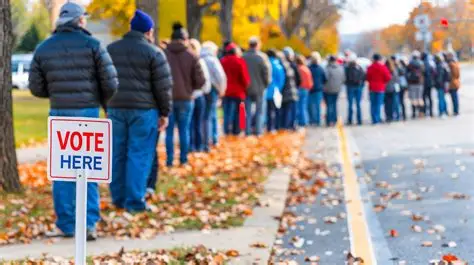
The Constitution is not lost. It is waiting for the VOTERS to claim it, defend it, and enforce it. Your VOTE during the 2026 U.S. midterm elections will start a new revolution in support of the U.S. Constitution. We are talking about the next 23 days!

“American Constitution, where art thou?”

First, I want to establish a clear fact: The 2026 U.S. midterm elections are 23 days away. The power of the vote is the power of the people, the only equalizer in American democracy. Every credible source reinforces the same truth: your vote is not symbolic; it is a governing force that shapes policy, representation, and the nation’s direction.

Regardless of what some degenerates believe, the U.S. Constitution is still the backbone of American democracy. But today, it feels less like a shared foundation and more like a contested battleground. Its authority is invoked constantly, yet honored inconsistently. The Constitution’s text is clear, yet people apply its principles selectively. The question “Where is the Constitution today?” is not rhetorical; it is a civic diagnosis.

The Constitution lives wherever the people insist on it. It is present in every courtroom where rights are defended, in every election where citizens choose accountability over chaos, and in every community that demands equal protection under the law. It shows up in the hands of judges required to apply it faithfully, teachers who interpret it and pass its meaning to the next generation, and voters who refuse to surrender their sovereignty.

In the United States of America, the Constitution is absent at times wherever power operates without restraint. It is missing when leaders treat legal norms as optional, and institutions bend under political pressure. For democracy to survive under the Constitution, citizens’ rights must never be treated as privileges that can be granted or withdrawn depending on who holds office. It fades when cynicism replaces civic responsibility, and when citizens disengage from the very process that keeps the Constitution alive.

The truth is simple: the Constitution is not self‑executing. It does not enforce itself. It requires a public willing to defend it, uphold it, and demand that leaders operate within its limits. When the people withdraw, power drifts. When the people engage, sovereignty returns.

Today, the Constitution stands at a crossroads. Polarization tests it, institutional conflict strains it, and competing interpretations stretch it. Yet it remains the only framework that can hold this diverse nation together. Its endurance depends not on politicians, but on citizens who understand that democracy is not a spectator sport.

As America continues to work toward being a “more perfect union, the Constitution must remain stable, fair, and free, and it must be placed back at the center of public life, not as a symbol, but as a standard. That means insisting on the rule of law, demanding accountability, and using the most powerful civic tool we possess: the vote. A nation that honors its principles can weather any storm. A nation that abandons them invites the storm inside. My People, VOTE the full ballot, top to bottom.

The Constitution is not lost. It is waiting for the VOTERS to claim it, defend it, and enforce it. Your VOTE during the 2026 U.S. midterm elections will start a new revolution in support of the U.S. Constitution. We are talking about the next 23 days!