Monthly Archives: July 2026

“Stay Woke”

“Stay woke” was never a trend, never a meme, and never a political insult. It was a survival command forged inside Black communities that understood, with absolute clarity, that racial danger in America was not accidental but intentionally and deliberately constructed through political systems that governed specific cities, towns, counties, and states. The phrase carried the weight of generations who learned that safety depended on reading the social and political landscape with precision, because the wrong jurisdiction could cost you your freedom or your life.

In the United States specifically, to stay woke meant knowing which law enforcement officers collaborated with white supremacist groups, which city councils enforced sundown ordinances, which state legislatures wrote segregation into law, and which judges refused equal protection. It meant understanding that danger was both cultural and political, mapped into the geography of power in the United States.

Black families used “stay woke” as a form of political self‑defense, teaching each other to recognize how authority operated on the ground. They knew that racial violence was often sanctioned, ignored, or even encouraged by the institutions responsible for justice. In the Deep South, segregation was not just a social custom but a legal system enforced by state constitutions and county sheriffs. In the Midwest and West, sundown towns were created through official ordinances, and police departments enforced racial boundaries with the full backing of local government.

Even in border states, danger shifted from county to county, requiring a level of political literacy that most Americans never had to develop. Black travelers relied on The Negro Motorist Green Book because it was both a cultural artifact that induced a political map disguised as a travel guide, documenting which jurisdictions were safe and which were lethal.

The original meaning of “stay woke” exposes a truth that modern debates often ignore. Racial danger in America was not the product of individual prejudice but the result of political decisions made by lawmakers, police chiefs, judges, zoning boards, and city councils. Awareness was not optional; awareness was survival. To stay woke was to refuse blindness in a country where blindness could kill you. It was a declaration that consciousness is a form of protection and that ignorance is a form of vulnerability.

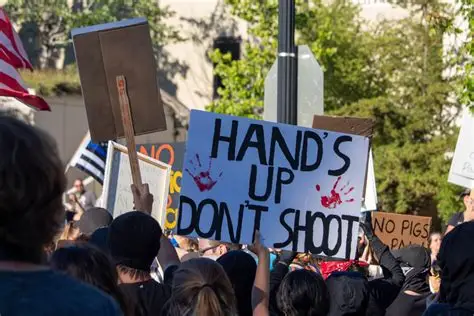
During the Ferguson and George Floyd protests, it carried the same urgency, reminding the nation that racialized policing was not a coincidence but a continuation of political patterns that had existed for decades. When the phrase expanded into broader conversations about immigration, gender justice, LGBTQ+ rights, and economic inequality, it did not lose its original meaning. It simply extended the logic that systems of power create harm wherever they are left unchallenged. The modern use of “woke” reflects the same foundational truth: injustice is often intentional, and vigilance is not extremism. Awareness is a lifetime responsibility.

The continuity between the original and modern meanings is unmistakable. The early use of “stay woke” demanded that Black communities understand how political actors created racial danger, while the modern use demands that society recognize how institutions produce inequity across multiple domains. Both meanings insist that people must remain conscious of the structures that shape their lives. Both meanings reject the idea that silence or ignorance is acceptable. Both meanings affirm that justice requires awareness, courage, and the refusal to look away.

To understand “stay woke” today, we must reclaim its origins as a political survival code rooted in the lived experiences and realities of Americans of African descent. The phrase was never about cultural fashion or partisan branding. It was about life, safety, and the moral obligation to confront systems that endanger human dignity. Its evolution into a broader call for justice reflects the same underlying principle: people must remain awake to the forces that shape their conditions, because those forces are often designed to operate in the shadows.

“Stay woke” remains a demand for consciousness in a nation where power in the hands of certain people still determines who is safe and who is vulnerable. It is a reminder that vigilance is not a threat to society but a safeguard for it. It is a declaration that awareness is a form of protection, and that justice requires people to stay awake, stay informed, and stay unwilling to accept systems that harm any human beings. It is, and always has been, a call to moral responsibility.

Facts: 1. People of African descent are more likely to be monitored, questioned, or policed in public spaces due to long-standing patterns of racialized enforcement. 2. Across housing, employment, healthcare, and education, Black individuals often face disparities rooted in policies and practices that were intentionally designed to exclude or disadvantage them. 3. In certain counties, towns, and jurisdictions, people of African descent historically faced and still face elevated risk due to political decisions made by sheriffs, city councils, zoning boards, and state legislatures. This is exactly the political geography that gave rise to the original meaning of “Stay Woke.”

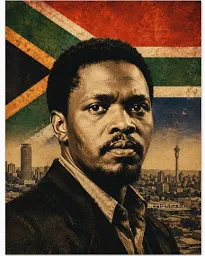
If Steve Biko Were Alive Today

If Steve Biko were alive today, he would insist that South Africa confront the core truth its democracy has not yet resolved: political freedom without economic redistribution is a hollow victory. His philosophy of Black Consciousness was never limited to psychological liberation; it was a call for the restoration of material power to the people who had been dispossessed.

Biko taught that dignity is inseparable from control over one’s economic life. In today’s South Africa, where inequality remains among the highest in the world, he would argue that liberation remains incomplete until the nation addresses material rights, land ownership, and the distribution of wealth. This is not speculation about elections or political outcomes; it is a continuation of the principles he articulated in the 1970s, which many scholars and activists interpret as a demand for structural transformation.

He would likely frame the issue this way: A people cannot be free while the land beneath their feet and the wealth around them remain concentrated in the hands of a few. For Biko, land was not merely a resource; it was identity, security, and the foundation of economic autonomy. Wealth was not merely money; it was the ability to shape one’s future. Without addressing these material pillars, South Africa’s liberation project remains morally unfinished.

I believe that, in Biko’s framework, redistribution would not be about revenge or punishment. It would be about repair, restoration, and constitutional justice, correcting a historical imbalance so that the nation can finally stand on equal footing.

South Africa stands at a crossroads where history demands courage. Steve Biko taught that the greatest weapon in the hands of the oppressor is the mind of the oppressed, and today, the greatest power in the hands of the people is the refusal to accept an unfinished freedom. The struggle now is not for recognition, but for restoration. Not for symbolism, but for substance.

Biko would remind us that liberation is not complete until the people reclaim the material foundations of their dignity, land, wealth, and the ability to shape their own future. He would call on South Africans to stand with the same clarity he demanded in his time: to organize, to speak, to build, and to insist that justice must be lived, not merely promised.

His message for this moment would be simple and uncompromising: Rise. Reclaim what was taken. Restore what was broken. And refuse to inherit a freedom that is only half‑built. The work of liberation did not end with the vote. It continues wherever people insist on their full humanity and refuse to settle for anything less.

Why Would A Lesser Power Start Wars With A Major Power That They Know They Cannot Win?

The Global community has reached the year 2026, and we still haven’t found a way to live in peace. People who read my works know that I am a “Lover of Peace”.

Throughout history, conflicts between vastly unequal powers have produced devastating consequences for the weaker side: mass casualties, destroyed infrastructure, and long-term instability. Yet narratives often claim that these weaker groups “started” the conflict. We are about to examine why such situations occur, who truly benefits, and why the surface explanation rarely reflects the deeper truth.

Historically, there have been myths of the “Weaker Aggressor!” The fact is, a small nation, militia, or marginalized population rarely initiates war, believing they can defeat a major military power. The historical record is clear: weaker actors suffer catastrophic losses, while stronger powers achieve strategic objectives. When a weaker group appears to be preparing for war, it is usually a sign that something else is happening beneath the surface.

Major powers frequently use “Provocation and Manufactured Justification” to create conditions in which the weaker side appears to be the aggressor. The major parties’ use of “Provocation and Manufactured Justification” to frame the weaker party as the aggressor. Some common tactics used by the major parties include economic blockades, territorial incursions, covert operations, proxy militias, and political destabilization. Once the weaker actor responds, the stronger power claims justification for full-scale war. This pattern is one of the oldest in geopolitics.

Leaders of weaker groups or nations may face internal crises of internal political survival. General rebellions lead to economic collapse or loss of legitimacy. In such cases, escalating conflict can temporarily unify their population. Again, the situations facing weak leaders are not strategic warfare; they are political survival.

Often, major parties use proxy dynamics and external manipulation. In these cases, many weaker actors are often influenced, funded, or armed by larger powers seeking conflict without appearing as aggressors. In these cases, the weaker group becomes the spark, not the instigator. The true driver of the conflict lies elsewhere.

Wars create strategic benefits for major powers. Major powers may benefit from war through resource control, territorial expansion, weakening rivals, securing military bases, domestic political distraction, and defense industry profits. The weaker population rarely benefits. They pay the price in blood and destruction.

Some weaker actors believe international intervention or global sympathy will restrain the stronger power. This is often a tragic miscalculation. When a population faces an existential threat, genocide, occupation, or annihilation, they may fight even if defeat is certain. In these cases, conflict is not initiated out of ambition but out of necessity.

When we determine who truly benefits from war, we also know who the instigator is.

As stated earlier, the beneficiaries of these conflicts are seldom the weaker groups. Instead, they tend to be major powers, regional rivals, political elites, arms manufacturers, or external actors seeking destabilization. The weaker group becomes a pawn in a larger geopolitical game.

In conclusion, when a vastly weaker actor appears to start a war with a major power, the deeper truth is almost always that they were provoked, cornered, manipulated, or forced into a situation where conflict became unavoidable. No rational leader willingly chooses annihilation. Understanding these dynamics is essential to identifying the true instigators and preventing future conflicts. If you evaluate all the wars and conflicts in existence today, you can easily identify who the instigators are and who the victims are.

In the end, the future of global stability depends on something profoundly simple: every state must obey the laws of war, and every community must insist on it. International humanitarian law is not an abstract framework reserved for diplomats and tribunals — it is the world’s promise to protect civilians, safeguard dignity, and restrain the violence that has scarred generations. When governments ignore these obligations, they do more than violate statutes; they unravel the moral fabric that holds the human family together.

Our global community can no longer afford silence or selective outrage. We must demand full compliance with IHL as a baseline of civilization — a universal expectation that transcends borders, politics, and alliances. The protection of human life is not negotiable. If humanity is to move forward, then accountability, lawful conduct, and the defense of civilian dignity must be the standards we all uphold.