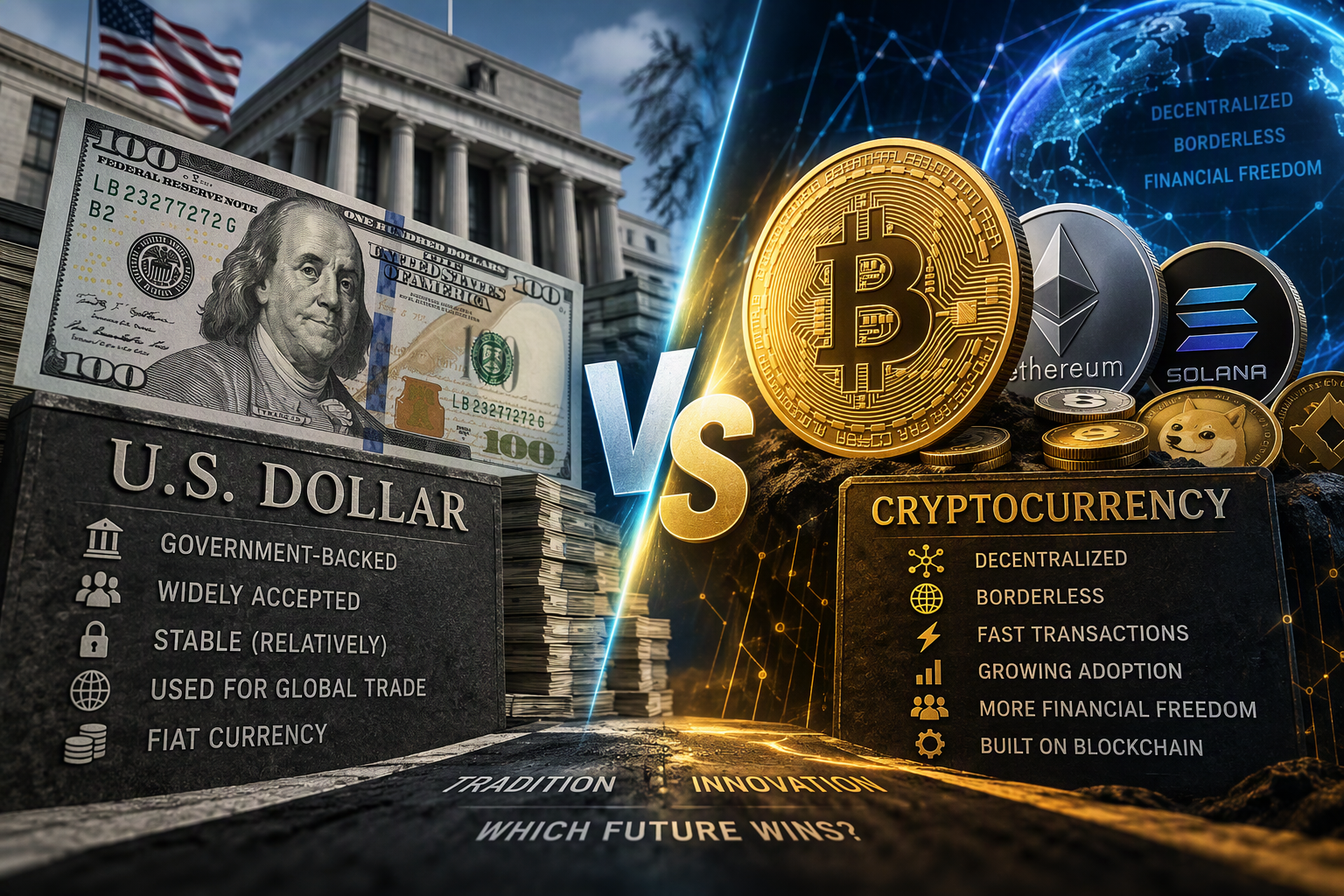
Across social media, financial podcasts, and political discussions, a growing claim has emerged: powerful billionaires and technology leaders want to replace the U.S. dollar with cryptocurrency. While this concern resonates with many Americans, it is important to separate verified facts from speculation.
The debate raises a broader question: Are we witnessing a monetary transformation similar to the one that occurred when Americans were required to surrender much of their privately held gold during the Great Depression?
In 1933, President Franklin D. Roosevelt signed Executive Order 6102, which prohibited the hoarding of gold coin, gold bullion, and gold certificates. Most Americans were required to deliver qualifying gold holdings to Federal Reserve banks and were compensated at the official government price.
The policy was adopted during the Great Depression as part of the federal government’s effort to stabilize the banking system and expand its ability to manage the nation’s money supply. While the order significantly restricted private ownership of monetary gold, exemptions existed for collectors, certain industrial uses, jewelry, and limited personal holdings.
For many Americans, gold represented tangible wealth that existed independently of government-issued currency. The transition strengthened the central role of the U.S. dollar and expanded the federal government’s influence over the nation’s monetary system.
Today, despite ongoing discussions about “de-dollarization,” the U.S. dollar remains the world’s dominant reserve currency. According to data from the International Monetary Fund (IMF), the dollar continues to account for the largest share of global foreign-exchange reserves held by central banks around the world.
The Federal Reserve Bank of St. Louis notes that the dollar has remained the world’s leading reserve currency since the end of World War II and continues to play a central role in international trade, finance, and foreign-exchange transactions.
Fact: Bitcoin and many other cryptocurrencies were designed as decentralized systems that operate without direct control from a central government or central bank. Transactions are recorded on blockchain networks and verified through distributed computer systems rather than a single governing authority.
However, decentralization alone does not mean cryptocurrency will replace the dollar. Governments, corporations, financial institutions, and central banks continue to conduct the overwhelming majority of global commerce using traditional currencies, particularly the U.S. dollar. Global reserve holdings also remain heavily concentrated in dollar-denominated assets.
Most economists and financial analysts currently view cryptocurrency as an alternative asset class rather than a near-term replacement for sovereign currencies. Nevertheless, cryptocurrency advocates continue to promote blockchain-based financial systems as alternatives to traditional banking and payment networks.
The debate ultimately centers on competing visions of monetary control. Supporters of cryptocurrency often argue that decentralized systems can reduce dependence on governments, central banks, and large financial institutions. Supporters of the current system contend that central-bank-backed currencies provide stability, legal protections, liquidity, and economic management tools that decentralized systems cannot yet match.
Some critics argue that if a decentralized cryptocurrency were ever to substantially displace the U.S. dollar in global trade and reserve holdings, it could weaken one of the principal sources of American financial influence. This remains a matter of debate, not fact. While some researchers have documented a gradual decline in the dollar’s share of global reserves over time, the dollar remains the dominant reserve currency, and no cryptocurrency currently performs that role on a comparable scale.
As I close: History shows that the definition of money can change dramatically over time. In the 1930s, Americans witnessed a shift from gold-backed wealth toward a monetary system centered more firmly on the U.S. dollar. Today, the rise of cryptocurrency has sparked a new debate about who should control money, how value should be stored, and whether technological innovation can challenge long-established financial institutions.
Whether cryptocurrency ultimately complements the dollar, competes with it, or remains a niche asset, the discussion reflects enduring questions about economic freedom, government authority, financial innovation, and the future of American power in the global economy.