For decades, global energy plans treated Africa as a resource, not a partner. The Desertec project, launched in 2009 and collapsed by 2014, was a perfect example. It was designed in Europe, financed in Europe, and aimed at exporting African sunlight out of Africa. The Desertec was a German‑led energy initiative (2009–2014) that aimed to build massive solar‑mirror farms in the Sahara and transmit the electricity to Europe using long‑distance HVDC cables. It collapsed due to political instability, cost, and lack of alignment between European and African priorities.
But the idea itself wasn’t the problem. The ownership model was. However, Africa still has what the world doesn’t: Clear Air. The Sahara has some of the cleanest, driest, clearest air on Earth. That matters because clear air produces maximum solar intensity, maximum mirror efficiency, and maximum year‑round output. Africa’s path forward is illuminative, powered by clear air, built by African hands, and guided by a destiny Africa finally controls.
This is the strongest solar resource on the planet, stronger than Europe, stronger than Asia, stronger than the Americas. Africa’s clear air is a natural advantage no one else can replicate. An Africa‑Owned Solar Grid is cheaper and smarter. A revised, Africa‑specific version of Desertec would cost far less than the original European plan. Why, no undersea cables to Europe, shorter HVDC transmission lines, local labor and engineering, African financing partnerships, and African priorities, not European politics.
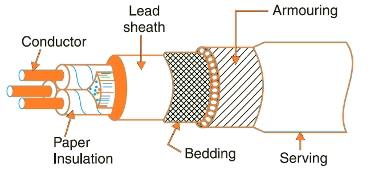
And Africa doesn’t need to copy Europe’s outdated overhead power lines. Transmission can start underground, protected from storms, sabotage, and environmental damage. This modern infrastructure must be built for Africa, by Africa. Millions of Jobs will be created for Africans, by Africans. A continent‑wide solar grid would create manufacturing jobs, construction jobs, engineering jobs, maintenance jobs, logistics jobs, research and development jobs, and industrial jobs powered by cheap electricity.
This isn’t a temporary project. It’s a permanent employment ecosystem. Africa’s clear air becomes a job creator. Africa’s sunlight becomes an industry. Africa’s energy becomes Africa’s future. Africa doesn’t need to export sunlight; Africa needs to use it. The old model was simple: Africa provides the land, Europe takes the power.
The new model is even simpler: Africa builds the power, Africa keeps the power, Africa grows from the power. A joint venture of African states can pool resources, share infrastructure, negotiate collectively, and build a continental grid that strengthens every region, West, North, East, Central, and Southern Africa. This is sovereignty. This is development. This is the future.
The Bottom Line: Africa’s clear air is Africa’s power. And 2026 is the moment for Africa to control its own destiny, politically, economically, and energetically. No undersea cables to Europe. No dependency, just Africa building Africa’s future. Africa’s future is no longer something to be decided elsewhere; in 2026, Africa claims its power, its energy, and its destiny.